Time for a little lab work update. This summer, I am primarily focusing on teeth and slight variations in dental formations that can indicate genetic relationships between people. Not the most riveting work but it will (hopefully) be really helpful in figuring out who these people buried at temples were and how they knew each other!
So teeth are pretty cool and can actually tell us a lot about people. Your dentist probably knows (or at least could know) more intimate details about you than you'd think! Here are some "fun" facts about teeth...
Humans have a dental formula (the order of the types of our teeth) that is unique to Old World (Africa/Europe/Asia) primates. Ours is 2:1:2:3, which means for each quadrant of our mouth (splitting our upper and lower jaws down the middle) we have 2 incisors, 1 canine, 2 premolars (or bicisupids), and 3 molars. Having these 4 different types of teeth is pretty cool- we can tear into stuff with our incisors and canines and really grind up tough foods with those molars. Other animals have really specialized dentition (think beavers, hippos, or most carnivores) that can also tell archaeologists, zoologists, and other interested people what types of food they eat.
Notably, that 3rd molar is giving a lot of people trouble these days (why we get our "wisdom" teeth removed!) because our diets have become more refined and our mouths are getting smaller, leaving less room to cram in all those molars!
Tooth problems can also tell you a lot (and cause you a lot of trouble if you have them!). Cavities are most often related to what types of food you are eating-- we all have been lectured about eating less sugar to prevent cavities! But there are a number of other factors too that contribute to the creation of cavities, such as the "stickiness" of your food (carbs are all pretty sticky), the acidity of your mouth (which naturally varies from person to person), whether you are pregnant (which changes the amount of saliva you have- who knew??), and thickness of dental enamel. So cavities are not the MOST reliable indicator of food but can give you some ideas. Here in the Andes, cavities in the past seem to be most closely related to eating maize (corn) or chewing coca. Location of the cavity on the tooth can help you figure out which!
Another cool thing about teeth is that the exact form of your tooth is pretty variable from person to person (what I'm looking into this summer). Your lower molars can have anywhere from 4-7 cusps, for example! I've spent a lot of time looking at past teeth of course, but have also been investigating my own in the mirror, because I'm a big nerd, duh. I learned that I have 6 cusps on my first 2 bottom molars (left and right) and only 4 on my left 3rd molar. The right one still hasn't erupted, which probably means it'll stay hidden forever, unless I get it removed!
Anyway. Really interesting stuff, right?? Now go brush your teeth and don't get cavities!
Monday, June 24, 2013

Saturday, June 15, 2013
Island Life
This week I spent two days on the two biggest islands in Lake Titicaca: Isla del Sol and Isla de la Luna (Island of the Sun and Island of the Moon). Both have been inhabited probably for as long as the lake basin has (at least 8000 years) but have some really neat Inka architecture on both which makes for great tourist attractions! I have visited Isla del Sol before but have recently learned some cool trivia about both islands, worth sharing!
 These are the Inka ruins on the Island of the Sun. The Sapa Inka (Inka king) would make annual pilgrimages to this island from Cusco. There are a few stories explaining why- one Spanish chronicler wrote that this island was the mythical Inka origin point, although few corroborate this. More likely, the Inka nobility visited this area regularly to reinforce their authority in this area (especially since the lake basin was home to some powerful polities prior to Inka conquest!). Interestingly, this island is actually called "Titikaka" in Inka legend, and this is probably where the whole lake got its name. What is modernly called Lake Titicaca is actually two large lakes, joined by a narrow strait at Tiquina. Both the upper and lower lakes have names in Aymara/Quechua (Chucuito and Winaymarka) but are collectively called Lake Titicaca today. The Island of the Sun was renamed thus by the Spanish and it persists today. Also, to complicate matters one step further, the island was called Titikaka because of a huge boulder that vaguely looks like the head of a native wild cat, the titi. Kaka means house or home. The island was thus named "the home of the titi" because of this sacred rock.


These are the ruins on the Isla de la Luna, nicely framed by a llama (and her baby which you can see if you count the legs!). This is a smaller site overall but slightly better preserved. This was a temple run by women devoted to the empire and sun god, Inti, called Ocllakuna. They did a lot of weaving for the state and ran temples such as this one. The island as a whole has an interesting mythology behind it too (as translated from Spanish on a signpost on the island by me, so with some editorial opinion!). Called Coati originally, this island is somewhat long, skinny, and curved (thus why the Spanish called in the island of the moon). However, Inka legend actually says that this island represents a great serpent, who swam through the lake to menace Isla del Sol and eat everyone living there. Luckily, a brave Inka saw the serpent coming, hoisted up a huge boulder, and crushed the serpents head with it! This sank the snake to the depths of the lake, where it turned to stone overtime and created the island, Coati. They say that late at night you can still here the snake wriggling to try to get out under the rocks...
Monday, June 10, 2013
Characters Welcome
It's been a busy week in Copacabana- mostly in the lab and settling into that routine, but also re-discovering all of the secrets and mysteries of the town! One of the great things about travelling is the opportunity to meet diverse and interesting people. And if characters are what you are looking for, Copacabana is the place for you!
This town is a somewhat odd and constantly fluctuating mix of people- local Aymara, ex-pat Argentinians who run a lot of the tourist restaurants, Bolivian tourists from La Paz in town for weekends, European tourists passing through (and a few Americans but less so because of the visa), and a sprinkling of other long term residents. After coming here for a few years, there is a fair amount of continuity in who you see. Here are some highlights (some details obscured since ya know, everyone has the internet these days!):
--The charming and helpful local internet cafe employee. I think this guy has helped me reconnect with the world every summer I've been here and has always cheerfully taken my money to do so. He has also recently helped me (try to) make some international phone calls. When I told him that the phone wasn't working, he tried a few things, then shrugged and said "No se, parece que los Estados Unidos tienen una problema" (I don't know, looks like the United States has a problem). True on so many levels!
--The grouchy Scotsman (?) who runs a local bar. I swear, I've only ever been super polite, left tips (which is also rare here), and approached him in both English and Spanish (not to presume anything) and this guy is just chronically and reliably grouchy. Kind of nice to know some things never change!
--The ex-pat American who is living here illegally (this character tends to change every year, but there's always one). Always eager to here updates from "back home"and then expand on why living here/in South America generally has been the most existential, uplifting, "honest" experience of their lives. Also generally mistrusts any government and forms of capitalism, unless of course you want to buy some of their handmade jewelry?
--The Aymara storeowner who really does want you to buy soemthing but also just wants to get back to watching her telenovella/child/soccer match. She'll heave a big sigh when you ask questions about how much things cost or if she has a t shirt in a different size/color, but don't try to walk out without purchasing anything! Once you've made her work for it, you better pay up. And then you will be rewarded with a big smile and a hearty "Gracias a USTEDES!"
--Any number of people yelling to advertise their taxi/minibus/bus to La Paz/Kasani/Tiquina/Cusco. Don't try to walk past certain corners without expecting to turn down rides to any number of places that you may or may not want to go. Generally destinations are shouted to a nice cadence though, so that's something.
And so many more! I guess someone could easily write a profile of the snobby archaeology student who walks around looking down on tourists or thinks she shouldn't pay a "gringa tax" (elevated prices for those who are white/not Bolivian) just because she has been here before!
This town is a somewhat odd and constantly fluctuating mix of people- local Aymara, ex-pat Argentinians who run a lot of the tourist restaurants, Bolivian tourists from La Paz in town for weekends, European tourists passing through (and a few Americans but less so because of the visa), and a sprinkling of other long term residents. After coming here for a few years, there is a fair amount of continuity in who you see. Here are some highlights (some details obscured since ya know, everyone has the internet these days!):
--The charming and helpful local internet cafe employee. I think this guy has helped me reconnect with the world every summer I've been here and has always cheerfully taken my money to do so. He has also recently helped me (try to) make some international phone calls. When I told him that the phone wasn't working, he tried a few things, then shrugged and said "No se, parece que los Estados Unidos tienen una problema" (I don't know, looks like the United States has a problem). True on so many levels!
--The grouchy Scotsman (?) who runs a local bar. I swear, I've only ever been super polite, left tips (which is also rare here), and approached him in both English and Spanish (not to presume anything) and this guy is just chronically and reliably grouchy. Kind of nice to know some things never change!
--The ex-pat American who is living here illegally (this character tends to change every year, but there's always one). Always eager to here updates from "back home"and then expand on why living here/in South America generally has been the most existential, uplifting, "honest" experience of their lives. Also generally mistrusts any government and forms of capitalism, unless of course you want to buy some of their handmade jewelry?
--The Aymara storeowner who really does want you to buy soemthing but also just wants to get back to watching her telenovella/child/soccer match. She'll heave a big sigh when you ask questions about how much things cost or if she has a t shirt in a different size/color, but don't try to walk out without purchasing anything! Once you've made her work for it, you better pay up. And then you will be rewarded with a big smile and a hearty "Gracias a USTEDES!"
--Any number of people yelling to advertise their taxi/minibus/bus to La Paz/Kasani/Tiquina/Cusco. Don't try to walk past certain corners without expecting to turn down rides to any number of places that you may or may not want to go. Generally destinations are shouted to a nice cadence though, so that's something.
And so many more! I guess someone could easily write a profile of the snobby archaeology student who walks around looking down on tourists or thinks she shouldn't pay a "gringa tax" (elevated prices for those who are white/not Bolivian) just because she has been here before!
Monday, June 3, 2013
Home again, home again
Hello again! I have finally arrived to Copacabana, the town where my research takes place. My few days in La Paz were restful and museum-full and now I'm (kind of) ready to get to work! (Obviously some motivation is lacking since I'm writing this rather than working!)
If any of you, dear readers, are ever in La Paz, be sure to check out Calle Jean (pictured below)! It's an older road, lined with colorful buildings, most of which contain museums, art galleries, and restaurants. The museums are all basically connected so one 10boliviano ticket (about $1.50) gets you into 5 museums! They are certainly smaller than the usual museum in the US, but have some interesting stuff. For instance, you can learn all about the war for Bolivia's coastline (did you know Bolivia used to have Pacific coastline? Reasons for why is was lost vary widely depending on who you ask and what country they are from!) or visit a museum devoted to Bolivia's national musical instruments. Pretty cool!


If any of you, dear readers, are ever in La Paz, be sure to check out Calle Jean (pictured below)! It's an older road, lined with colorful buildings, most of which contain museums, art galleries, and restaurants. The museums are all basically connected so one 10boliviano ticket (about $1.50) gets you into 5 museums! They are certainly smaller than the usual museum in the US, but have some interesting stuff. For instance, you can learn all about the war for Bolivia's coastline (did you know Bolivia used to have Pacific coastline? Reasons for why is was lost vary widely depending on who you ask and what country they are from!) or visit a museum devoted to Bolivia's national musical instruments. Pretty cool!

Copacabana is always changing-- one thing about the economy in Bolivia is that there is always money for construction! In Copa, because it is on the "tourist track" between Cusco, Peru, and La Paz, new hostels spring up every year. The newer ones are getting creative with their architecture- this one under construction looks like a snail shell, while the buildings in the background are a perfect circle and an igloo! All of these little houses are part of the small hostel, just up the hill from our house.

The family I live with here are pretty amazing. Pablo and Juana have 4 kids: Rodrigo (14), Ariel (11), Estefany (9) and Raymi (7). They are all pretty funny and smart (Rodrigo just made it into the regional science olympiad for Astrophysics!!) and are good fun to play games with in the evening when it gets cold! Here's a picture of Estefany, Raymi, and their cousin, Christian. Some crazy American thought it was a good idea to give them nerf guns! :)

Alright, well I should probably commit to doing some lab work for the day! Happy Monday!
Thursday, May 30, 2013
A Long Expected Arrival
Well, time to update the old blog again! I'm back in Bolivia for one more season of fieldwork, possibly my last for my dissertation research. Here's a quick overview of the plan!
I'm currently in La Paz, one of the capital cities of Bolivia. The airport in La Paz is at about 4000m above sea level (or 14000ish ft) while the city center (where I'm staying for a few days) is a bit lower at 3500masl (or 12000ish ft). The center of La Paz is a good place to hang out for a few days before I head to Copacabana since it is about 300-500m lower than the house in Copacabana and gives your body some time to adjust. I've never had real problems with the altitude, just a mild headache or out of breathness when going up stairs, but some people suffer pretty badly from headaches, nausea, and dizziness. It doesn't help that you typically fly here straight from Miami FL (which is right at sea level) so it's a big jump!
The weather is gorgeous out right now, although definitely chillier and drier than North Carolina! It is sunny but probably only 60 degrees and 0% humidity. Copacabana will be similar, although it can get quite warm in the sun during the day and then below freezing at night! Very strange, but something about the combination of the altitude and desert-like environment causes big temperature swings.
I'll head to Copacabana on Sunday or Monday, after Sergio (the professor from Central Michigan University that I work with) and Stasia (his wife and project co-director) arrive early Sunday morning. Then the work begins! This summer, the plan is to finish collecting data on disease lesions and dietary indicators on about 10-20 people and then start the next stage- measuring variation in genetic dental traits (ie how many cusps are on a molar or how many roots your teeth have) to see how people were genetically related! The hope is to be able to recreate some idea of genetic relationships, which typically relates (at least partially) to kinship and community. I will measure this for all 300 individuals (ie skeletons) and then will be done with data collection for the dissertation! At least in the field. Then they tell me I have to do some analysis and write this dang thing called a dissertation. But that won't be too hard, right? RIGHT??? :)
Alright, that's all for now! The updates will be coming and hopefully will be accompanied by more photos in the future! (The internet is a bit slow for that currently...)
I'm currently in La Paz, one of the capital cities of Bolivia. The airport in La Paz is at about 4000m above sea level (or 14000ish ft) while the city center (where I'm staying for a few days) is a bit lower at 3500masl (or 12000ish ft). The center of La Paz is a good place to hang out for a few days before I head to Copacabana since it is about 300-500m lower than the house in Copacabana and gives your body some time to adjust. I've never had real problems with the altitude, just a mild headache or out of breathness when going up stairs, but some people suffer pretty badly from headaches, nausea, and dizziness. It doesn't help that you typically fly here straight from Miami FL (which is right at sea level) so it's a big jump!
The weather is gorgeous out right now, although definitely chillier and drier than North Carolina! It is sunny but probably only 60 degrees and 0% humidity. Copacabana will be similar, although it can get quite warm in the sun during the day and then below freezing at night! Very strange, but something about the combination of the altitude and desert-like environment causes big temperature swings.
I'll head to Copacabana on Sunday or Monday, after Sergio (the professor from Central Michigan University that I work with) and Stasia (his wife and project co-director) arrive early Sunday morning. Then the work begins! This summer, the plan is to finish collecting data on disease lesions and dietary indicators on about 10-20 people and then start the next stage- measuring variation in genetic dental traits (ie how many cusps are on a molar or how many roots your teeth have) to see how people were genetically related! The hope is to be able to recreate some idea of genetic relationships, which typically relates (at least partially) to kinship and community. I will measure this for all 300 individuals (ie skeletons) and then will be done with data collection for the dissertation! At least in the field. Then they tell me I have to do some analysis and write this dang thing called a dissertation. But that won't be too hard, right? RIGHT??? :)
Alright, that's all for now! The updates will be coming and hopefully will be accompanied by more photos in the future! (The internet is a bit slow for that currently...)
Tuesday, July 17, 2012
Hello, Mr. President!
Hello dear readers! I've been back in Copacabana for a little over a week now and its been great to settle back in to "normal", everyday, Bolivian life, as well as have a few adventures!

 The coolest thing that has happened since I last wrote (besides of course my scintillating work in the lab was the chance to hear and see Evo Morales, the president of Bolivia, speak! They are in the process of building a small airport here near Copacabana to increase internal tourism (they are big on promoting tourism between the major centers in Bolivia here since they are not too crazy about Europeans or Americans) and Evo came to initiate the land and give a short speech about continued improvements in the area. It was really neat because there weren't that many people there (probably about 1000) and we were able to get pretty close to the stage! After the ceremonies, (which involved lots of flower necklaces for Evo, the VP Garcia, Cocorico the Governor of La Paz, and other officials as well as an interlude of dancing and traditional music) we were actually able to meet the VP, who was left somewhat to the wolves (the masses aka us) while Evo was hustled off back to his helicopter. Which he flies himself by the way. How are you gonna upstage that, Obama??
We went to La Paz this Sunday to watch the Entrada 16 de Julio. This is a huge dance/parade/event that I participated in last year, in the group Chacaltaya which is one of 54. Chacaltaya is the biggest, with over 2000 dancers, and I had fun watching what I been a part of last year. Monday is the second day of the event, parading/dancing followed by lots of drinking, and the students and I were invited to join. It was way less stressful than last year and a lot of fun to be recognized and remembered by other women who danced last year too-- although they were all asking why I hadn't danced this year! Maybe next year I can afford it again...
We have another big festival coming up this weekend-- Kollasuyu, the small town on the peninsula that we dance for and at which we always have an enjoyable, if cold, time. Besides that, a daytrip to Tiwanaku, and the Fair of Copacabana in the first week of August, I just have a lot of lab work left to do! Its good there's not too much left going on since I only have 3 more weeks!

 The coolest thing that has happened since I last wrote (besides of course my scintillating work in the lab was the chance to hear and see Evo Morales, the president of Bolivia, speak! They are in the process of building a small airport here near Copacabana to increase internal tourism (they are big on promoting tourism between the major centers in Bolivia here since they are not too crazy about Europeans or Americans) and Evo came to initiate the land and give a short speech about continued improvements in the area. It was really neat because there weren't that many people there (probably about 1000) and we were able to get pretty close to the stage! After the ceremonies, (which involved lots of flower necklaces for Evo, the VP Garcia, Cocorico the Governor of La Paz, and other officials as well as an interlude of dancing and traditional music) we were actually able to meet the VP, who was left somewhat to the wolves (the masses aka us) while Evo was hustled off back to his helicopter. Which he flies himself by the way. How are you gonna upstage that, Obama??
We went to La Paz this Sunday to watch the Entrada 16 de Julio. This is a huge dance/parade/event that I participated in last year, in the group Chacaltaya which is one of 54. Chacaltaya is the biggest, with over 2000 dancers, and I had fun watching what I been a part of last year. Monday is the second day of the event, parading/dancing followed by lots of drinking, and the students and I were invited to join. It was way less stressful than last year and a lot of fun to be recognized and remembered by other women who danced last year too-- although they were all asking why I hadn't danced this year! Maybe next year I can afford it again...
We have another big festival coming up this weekend-- Kollasuyu, the small town on the peninsula that we dance for and at which we always have an enjoyable, if cold, time. Besides that, a daytrip to Tiwanaku, and the Fair of Copacabana in the first week of August, I just have a lot of lab work left to do! Its good there's not too much left going on since I only have 3 more weeks!
Thursday, July 5, 2012
Archaeology abounds!
Well, two exciting weeks in Cusco have passed and its time to head back to Copacabana for the remainder of the summer! How did I spend these two weeks since I last posted? So glad you asked...
I've walked about a million miles in search of archaeological sites (both in pursuit of tourism and academic purposes), supervised the digging of a few test pits at an Inka site, listened to 7 hours of papers in Spanish about Andean bioarchaeology and forensics, successfully navigated to and from some small towns via the 'collectivo' travel system, taken a few naps, fought (and lost) with some cacti, watched Italy bomb the EuroCup championship, drank my fair share of pisco sours, played tour guide for some Inka sites around town, and efficiently neglected the internet!
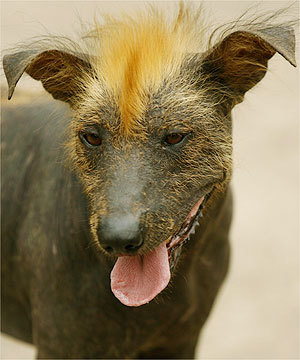
Last week (the 25th-31st), I was lucky enough to crash with another archaeologist here in Cusco at night. During the days, I had a variety of exciting adventures! Monday, I spent hiking around the Lucre basin with an archaeologist friend in search of potential dissertation sites for him. It was really fun, although exhausting and I had a few harsh encounters with some vicious cacti. But ultimately, it was really neat to just explore the countryside a little bit. I even learned to identify some ceramics! I went to a bioarch conference on Tuesday that was happening here in town-- and understood just about everything that they talked about! It was a good vocabulary lesson as well as really interesting reports on mummies, violence, health, and mortuary practices from around the Cusco region. Wednesday, I was supposed to head to Ollantaytambo and analyze some skeletons excavated by Sergio's nephew, Jorge, but my trip was delayed by his being out of town! Kylie was supernice and let me stay with her another few nights, and I played around town a little bit, taking in some Eurocup games and enjoying the nice weather. Thursday, I went to help Kylie excavate at her site, which was nice to get some more excavation experience! A long day but we found some cool stuff and got to play in the dirt, so I was happy! Finally, on Friday, I made it out to Ollantaytambo (where there are some really cool archaeological sites too--more on that to come!) and quickly looked over the bones (only one person, but buried with cool antlers!). Jorge also had me look at some dog bones, for any evidence that could be disease. Definitely not an expert in that but I think I did okay! It was cool to be at his house/lab because he has EIGHT dogs, six of which are of the Andean hairless variety. They are really ridiculous looking creatures. (evidence http://paxarcana.files.wordpress.com/2008/11/peruvian_hairless_dog.jpg)
Saturday I finally moved out of Kylie's house, and into a hostal where Brian joined me for some vacation and tourist fun! We spent the last 5 days doing all the tourist classics around Cusco-- the big sites above the city from the Inka occupation, museums in the city of art- both Spanish influenced and prehispanic- and artifacts, taking day trips to some of the surrounding areas-- and enjoying the tourist food selection (deLICIOUS falafel!)!
I'm heading back to Copacabana tonight on an overnight bus. The main benefit of this is not missing any daytime to travel, ease of sleep to speed up the trip, and not having to change buses in Puno! Should be back in Bolivia by 9am tomorrow morning, back to the daily grind of dissertation data collection. Yay!!
Only one more month here this summer. How is 2012 more than half over already??
I've walked about a million miles in search of archaeological sites (both in pursuit of tourism and academic purposes), supervised the digging of a few test pits at an Inka site, listened to 7 hours of papers in Spanish about Andean bioarchaeology and forensics, successfully navigated to and from some small towns via the 'collectivo' travel system, taken a few naps, fought (and lost) with some cacti, watched Italy bomb the EuroCup championship, drank my fair share of pisco sours, played tour guide for some Inka sites around town, and efficiently neglected the internet!
Last week (the 25th-31st), I was lucky enough to crash with another archaeologist here in Cusco at night. During the days, I had a variety of exciting adventures! Monday, I spent hiking around the Lucre basin with an archaeologist friend in search of potential dissertation sites for him. It was really fun, although exhausting and I had a few harsh encounters with some vicious cacti. But ultimately, it was really neat to just explore the countryside a little bit. I even learned to identify some ceramics! I went to a bioarch conference on Tuesday that was happening here in town-- and understood just about everything that they talked about! It was a good vocabulary lesson as well as really interesting reports on mummies, violence, health, and mortuary practices from around the Cusco region. Wednesday, I was supposed to head to Ollantaytambo and analyze some skeletons excavated by Sergio's nephew, Jorge, but my trip was delayed by his being out of town! Kylie was supernice and let me stay with her another few nights, and I played around town a little bit, taking in some Eurocup games and enjoying the nice weather. Thursday, I went to help Kylie excavate at her site, which was nice to get some more excavation experience! A long day but we found some cool stuff and got to play in the dirt, so I was happy! Finally, on Friday, I made it out to Ollantaytambo (where there are some really cool archaeological sites too--more on that to come!) and quickly looked over the bones (only one person, but buried with cool antlers!). Jorge also had me look at some dog bones, for any evidence that could be disease. Definitely not an expert in that but I think I did okay! It was cool to be at his house/lab because he has EIGHT dogs, six of which are of the Andean hairless variety. They are really ridiculous looking creatures. (evidence http://paxarcana.files.wordpress.com/2008/11/peruvian_hairless_dog.jpg)
Saturday I finally moved out of Kylie's house, and into a hostal where Brian joined me for some vacation and tourist fun! We spent the last 5 days doing all the tourist classics around Cusco-- the big sites above the city from the Inka occupation, museums in the city of art- both Spanish influenced and prehispanic- and artifacts, taking day trips to some of the surrounding areas-- and enjoying the tourist food selection (deLICIOUS falafel!)!
I'm heading back to Copacabana tonight on an overnight bus. The main benefit of this is not missing any daytime to travel, ease of sleep to speed up the trip, and not having to change buses in Puno! Should be back in Bolivia by 9am tomorrow morning, back to the daily grind of dissertation data collection. Yay!!
Only one more month here this summer. How is 2012 more than half over already??
Subscribe to:
Posts (Atom)